Axovera Labs: running an online store with AI agents and a human in the loop
How we connected a WooCommerce store to its books, shipping and reviews, and set up AI agents for bookkeeping, QA and store operations.
Related-business disclosure. Axovera Labs is owned by Renovo Digital’s partners. This isn’t an arm’s-length client engagement. We show it because it’s real work we use every day, and it’s where we test our methods before we bring them to clients.


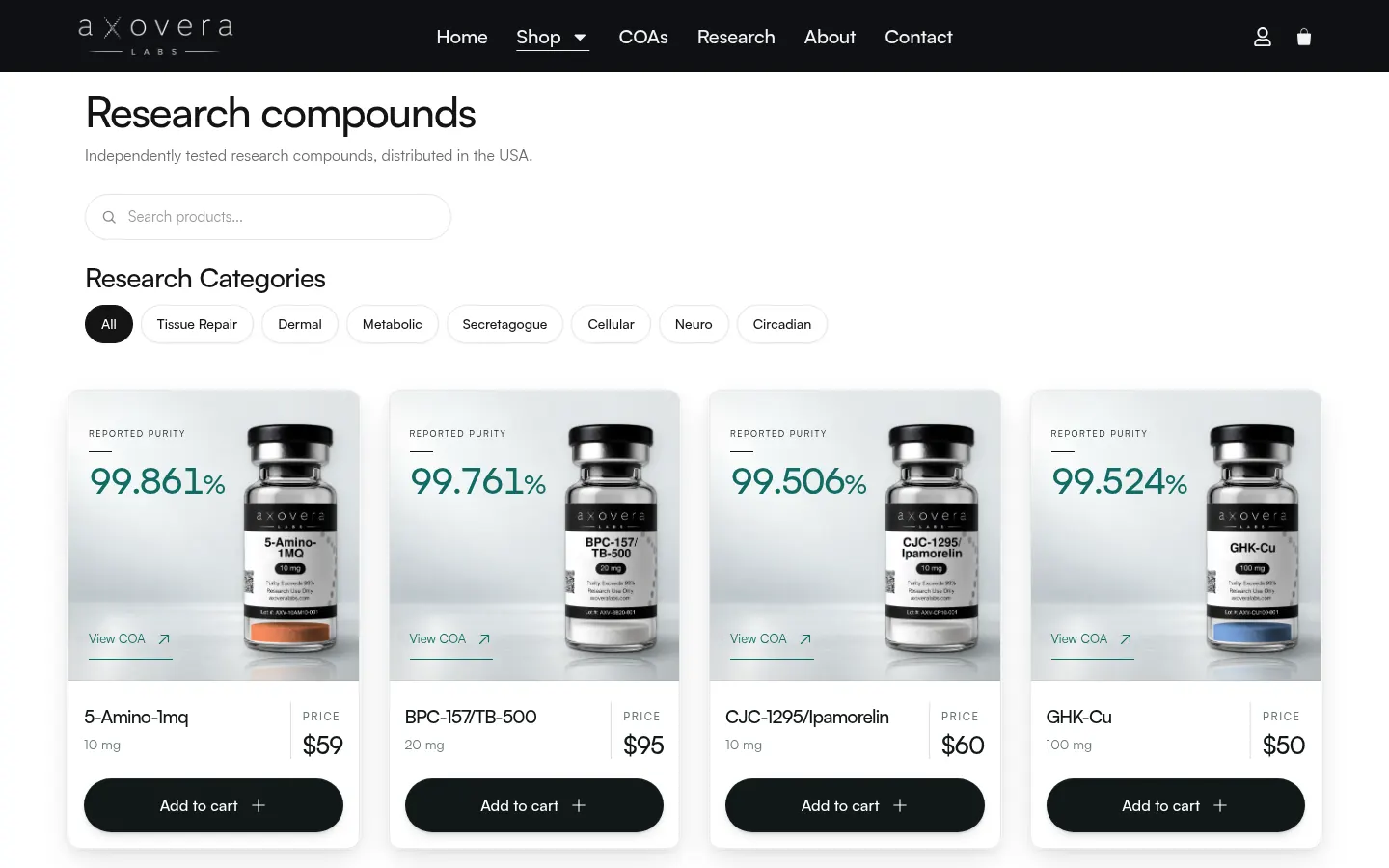
The live store, captured Oct 19, 2026 at desktop (1440px) and mobile (390px). Shown for the operations work behind it.
The challenge
Axovera Labs is a small online store. As orders grew, the owners became the glue between systems: orders in WooCommerce, payments in Stripe, labels in ShipStation, books in Zoho Books, and bank activity in a separate account. Each was copied by hand. Sales tax, payment fees and postage had to be worked out after the fact, and every website change was a risk because nobody had time to check it properly.
Before
- Orders, fees and postage re-keyed into the books
- Sales tax worked out manually at month end
- Site changes shipped without a second check
- No regular way to collect customer reviews
After
- Orders, Stripe fees and coupons post to the books by script
- Postage reconciled per label, with drift flagged
- A QA agent checks every change on desktop and mobile
- Review collection live, kept off the payment steps
One flow. A person on every decision.
Data moves once, from the tools the store already paid for into the books, through rules the owners wrote down first.
Sources
WooCommerce, Stripe, ShipStation, bank
Orders, payments, fees, labels and deposits.
Automation
Scripts and AI agents
Rules written first, a backup before every change, never posts twice, flags what it isn’t sure about.
Approval
Owner approves
Nothing touching money, customers or the live store changes without sign-off.
Books
Zoho Books and reports
Invoices and journal entries, plus sales-tax, cost-of-goods and drift reports.
Our approach: owners in charge, rules first, no new platform
Owners stay in charge
The rule from day one: agents read freely, but nothing that touches money, customers or the live store changes without an owner’s approval. Each agent has a narrow role (bookkeeping, QA, store operations, marketing) and reports in plain language, so the owners can approve quickly from their phone.
Written rules before automation
We wrote the accounting rules down before writing code: how each order, refund, fee, coupon and shipping label should land in the books, how sales tax is tracked, and how costs of goods are scheduled. Every script takes a backup before changing anything, keeps a state file so it never posts twice, and flags anything it isn’t sure about instead of guessing.
Connect what’s already paid for
No new platform. We connected WooCommerce, Stripe, ShipStation and Zoho Books with small, auditable scripts, and used AI agents to run, check and explain them.
Eight small systems. One quiet back office.
Each one is a small, auditable piece the owners can read, run and undo.
Order-to-books sync
WooCommerce orders become Zoho Books invoices, with Stripe processing fees, coupons, refunds and sales tax handled by rule.
Postage sync
One journal entry per ShipStation label, automatic reversals for voided labels, and a drift check between the carrier balance and the books.
Bank and payment reconciliation
Bank deposits matched to Stripe payouts, with exceptions flagged for review.
Sales-tax reporting
A monthly owed-vs-collected reconciliation and return worksheet.
Cost-of-goods and inventory schedules
Built from the bill of materials, plus an affiliate payout reconciliation design.
Store QA
A full site review at desktop (1440px) and mobile (390px) sizes, prioritized fixes, and a QA agent that re-checks every change before it’s signed off.
Review collection
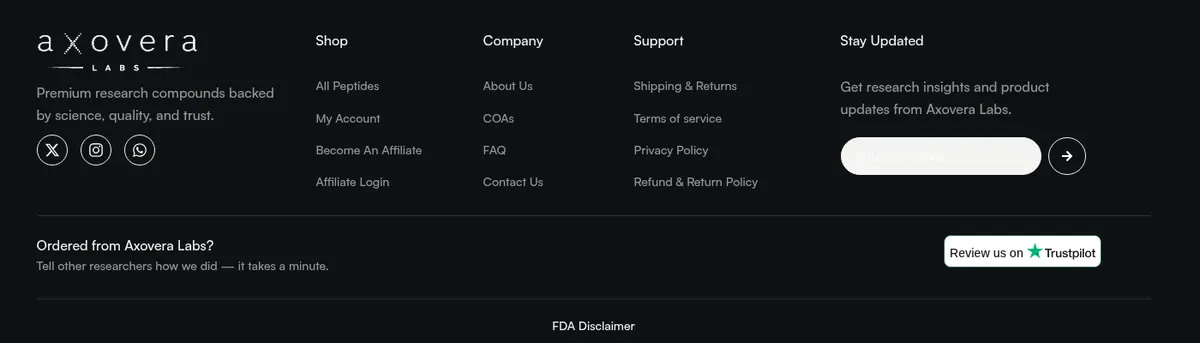
A Trustpilot review button in the site footer, deliberately hidden on checkout and payment pages so it never distracts a buyer.
Prototypes before spend
Features such as checkout address autocomplete are mocked up on the real pages first, so the owners decide before anything is built or paid for.
The stack
What we’d bring to your business
The same pattern works for any business that sells online or bills customers: connect the systems you already pay for, write the rules down, let agents do the repetitive work, and keep a person approving what matters.
Axovera Labs is shown here for its operations work only. Nothing on this page describes or endorses its products.
Want your back office to run like this?
Thirty minutes with a partner. We’ll show you where it applies, and where it doesn’t.
Free. A partner on the call. You leave with a recommendation, even if it isn’t us.